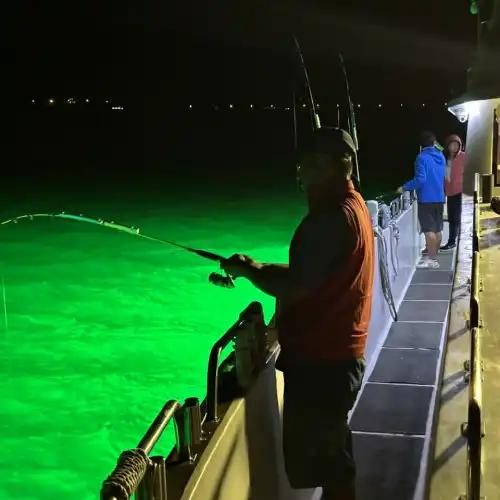


The Ocean Lights That Bring Fish Out of the Darkness: The Fascinating World of Fishing Lights at Sea
When night falls over the open ocean, something extraordinary begins to happen.
Far from the coastline, small points of light appear across the dark horizon. From a distance, they may resemble floating cities or stars resting on the water. But these glowing lights belong to fishing boats using one of humanity’s oldest and most effective techniques—fishing with light.
Fishing lights at sea have been used for centuries in different parts of the world. Today, this practice combines traditional knowledge with modern technology to attract fish and improve catches. While beautiful to witness, the glowing ocean also tells a story about survival, industry, science, and the delicate balance between humans and marine ecosystems.
Why Do Fishing Boats Use Lights?
Many marine species naturally react to light.
Small organisms such as plankton are attracted to illuminated areas during nighttime. As plankton gather, small fish follow to feed, and larger fish eventually arrive to hunt the smaller ones.
Fishermen take advantage of this natural chain reaction.
By placing powerful lights above or near the water’s surface, they create an artificial feeding zone that attracts schools of fish into a concentrated area where they can be harvested more efficiently.
This method is commonly used for species such as squid, sardines, anchovies, and certain types of mackerel.
Ancient Technique, Modern Technology
Fishing with light is not a modern invention.
Historically, fishermen carried torches, burning baskets, oil lamps, and simple fire-based lighting onto wooden boats. Coastal communities around the world discovered that illuminated water increased their chances of success.
Today, fishing operations use advanced lighting systems including:
- LED fishing lamps
- Halogen marine lights
- Underwater lighting arrays
- Generator-powered floodlights
- Energy-efficient commercial lighting systems
Modern systems allow vessels to adjust brightness and target specific species.
Some fishing fleets can illuminate large sections of ocean surface, creating dramatic nighttime scenes visible from aircraft and satellites.
The Most Famous Type: Squid Fishing
Among all forms of light fishing, squid fishing is perhaps the most visually striking.
Squid are highly responsive to bright light at night. Fishing vessels often line their decks with rows of intense lamps that transform the surrounding sea into a glowing white field.
Fishermen slowly attract squid upward from deeper waters until they gather near the surface.
Once concentrated, specialized lines and equipment capture them efficiently.
Entire fleets working together can create spectacular patterns of light stretching across the ocean.
In several countries, squid fishing has become both an economic activity and an unforgettable visual symbol of maritime life.
A Beautiful Sight with Environmental Questions
Although fishing lights can improve efficiency, scientists and environmental groups continue studying their ecological effects.
Artificial nighttime illumination may alter animal behavior in some regions.
Potential concerns include:
- Disrupting natural feeding patterns
- Increasing pressure on fish populations
- Changing migration routes
- Affecting marine biodiversity
Many countries now regulate fishing seasons, light intensity, vessel licensing, and protected marine areas to encourage sustainable practices.
Responsible management helps ensure that fishing communities can continue earning livelihoods while protecting ocean ecosystems.
The Human Side of Fishing at Sea
Behind every bright vessel is a crew working long hours.
Night fishing often requires patience, experience, and physical endurance. Fishermen monitor weather conditions, equipment performance, ocean currents, and fish movement throughout the night.
For many coastal families, fishing is more than a job—it is a tradition passed through generations.
The lights floating on the sea represent both hope and uncertainty. Some nights produce abundant catches; others return almost empty.
Yet every evening, countless boats head back into the darkness searching for another opportunity.
Why Ocean Fishing Lights Fascinate People
Images of illuminated fishing fleets continue to attract photographers and travelers around the world.
Against black water and star-filled skies, the bright reflections create surreal landscapes unlike anything found on land.
Some people compare them to floating festivals.
Others describe them as oceans filled with stars.
But beyond their beauty lies an important reminder: the relationship between humans and the sea has always depended on innovation, adaptation, and respect for nature.
Final Thoughts
Fishing lights at sea reveal one of the most fascinating interactions between technology and natural behavior.
From ancient torch-lit boats to modern LED-powered vessels, this technique has helped communities harvest food and support local economies for generations.
At the same time, it highlights the importance of maintaining healthy oceans for future generations.
The next time you see glowing lights across a dark sea, remember—you may be witnessing a tradition that connects science, survival, and the enduring mystery of life on the water.