Tag: rainforest wildlife

  • 🌿 Secrets of the Amazon: 7 Astonishing Animal Stories That Sound Too Incredible to Be True

    🌿 Secrets of the Amazon: 7 Astonishing Animal Stories That Sound Too Incredible to Be True

    Image
    Image
    Image
    Image
    Image
    Image

    🌿 Secrets of the Amazon: 7 Astonishing Animal Stories That Sound Too Incredible to Be True

    Category: Wildlife | Nature | Animal Stories

    Tags: Amazon rainforest, Amazon animals, wildlife stories, rainforest wildlife, exotic animals, strange animals, Amazon biodiversity, nature facts, wildlife conservation, animal behavior, jungle creatures, South America

    Meta Description:
    Discover seven extraordinary true stories about remarkable Amazon animals—from birds with ancient origins to dolphins surrounded by legends. Explore the mysterious wildlife that makes the Amazon rainforest unlike anywhere else on Earth.


    Secrets of the Amazon: 7 Astonishing Animal Stories That Sound Too Incredible to Be True

    The Amazon Rainforest is often called the “lungs of the Earth,” but it is also one of the greatest living museums of wildlife ever known. Stretching across nine South American countries, this vast ecosystem is home to millions of species, many of which still haven’t been scientifically described.

    Among these incredible creatures are animals that behave in ways so unusual they almost seem fictional. Some build giant underground kingdoms. Others have survived virtually unchanged for millions of years. A few have inspired myths passed down through Indigenous communities for centuries.

    Here are seven remarkable stories from the Amazon that reveal just how extraordinary nature can be.


    1. The Harpy Eagle – The Silent King Above the Trees

    Image Alt Text: Harpy eagle resting on a massive rainforest branch high above the Amazon canopy.

    Far above the rainforest floor lives one of the world’s most powerful birds of prey—the Harpy Eagle.

    Unlike eagles that hunt over open landscapes, the Harpy Eagle has evolved for life among towering trees. Its broad wings allow it to weave through dense forest while its enormous talons can rival the claws of a grizzly bear in size.

    Instead of chasing prey over long distances, the eagle patiently watches from hidden branches before launching a sudden attack.

    Its favorite meals include:

    • Sloths
    • Monkeys
    • Large birds
    • Tree-dwelling mammals

    A single pair may defend a territory covering dozens of square kilometers, raising only one chick every two to three years.

    Because it breeds so slowly, protecting mature rainforest habitat is essential for its survival.


    2. The Pink River Dolphin – The Amazon’s Legendary Shape-Shifter

    Image Alt Text: Pink river dolphin swimming gracefully through calm Amazon River water.

    Few Amazon animals have inspired more legends than the Pink River Dolphin.

    Known locally as the “Boto,” these freshwater dolphins begin life gray but gradually develop beautiful shades of pink as they age.

    Local folklore tells stories of dolphins transforming into elegant humans during nighttime celebrations before returning to the river at dawn.

    Although science explains their unusual color through blood vessel development and scar tissue, the myths remain an important part of Amazonian culture.

    Unlike ocean dolphins, these animals possess remarkably flexible necks, allowing them to weave through flooded forests during the rainy season.

    When rivers overflow, they navigate between submerged trees hunting fish hidden among flooded vegetation.


    3. Leafcutter Ants – Tiny Farmers of the Jungle

    Image Alt Text: Thousands of leafcutter ants carrying green leaf fragments across the Amazon forest floor.

    At first glance, leafcutter ants appear to be collecting leaves for food.

    In reality, they don’t eat the leaves at all.

    Instead, they use them to cultivate fungus inside enormous underground gardens.

    These fungal farms are carefully maintained:

    • Workers trim fresh leaves.
    • Gardeners remove mold.
    • Soldiers defend entrances.
    • Nurses care for larvae.

    The colony depends entirely on its cultivated fungus for survival.

    Some underground nests contain millions of ants connected through hundreds of chambers.

    Scientists consider leafcutter ants among the world’s earliest agricultural societies—developing farming millions of years before humans ever planted crops.


    4. Giant Otters – The Loud Families of Amazon Rivers

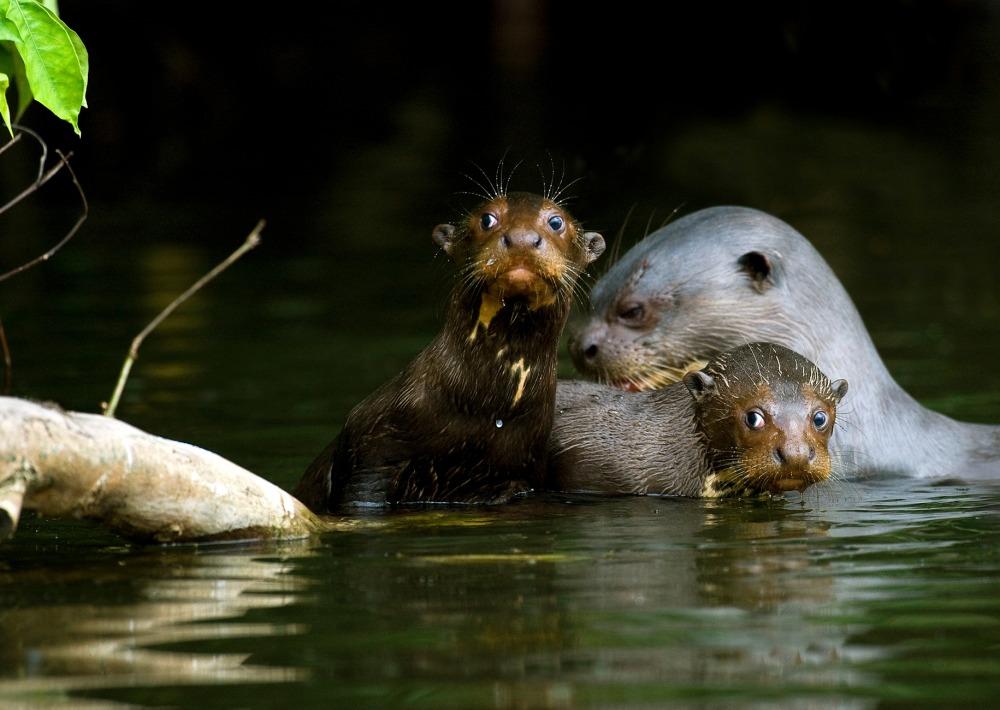
    Image Alt Text: Giant otter family swimming together in a clear Amazon river.

    Many people imagine otters as quiet, playful animals.

    Amazon Giant Otters are different.

    Living in close-knit family groups, they constantly communicate using whistles, growls, chirps, barks, and loud warning calls.

    Researchers have identified more than twenty distinct vocalizations.

    Every family member has a role:

    • Adults hunt cooperatively.
    • Older siblings help raise pups.
    • Youngsters learn fishing skills through observation.
    • The entire group defends territory together.

    Watching giant otters hunt resembles watching wolves working as a team.

    Their social intelligence is among the highest of any aquatic mammal.


    5. The Hoatzin – A Bird That Looks Like a Dinosaur

    Image Alt Text: Hoatzin bird perched among dense Amazon vegetation displaying its unusual crest.

    The Hoatzin may be one of the strangest birds alive.

    Nicknamed the “stinkbird” because of its unusual digestive system, it ferments leaves inside an enlarged crop much like cows digest grass.

    Even stranger are its chicks.

    Young Hoatzins hatch with tiny claws on their wings.

    When threatened by predators, they leap into nearby water.

    After danger passes, they climb back into the nest using those wing claws.

    Scientists believe these claws resemble features seen in ancient birds from the age of dinosaurs.

    Very few modern birds retain anything similar.


    6. Poison Dart Frogs – Tiny Jewels With Powerful Defenses

    Image Alt Text: Brightly colored poison dart frog resting on a rainforest leaf after rainfall.

    The Amazon rainforest contains some of Earth’s brightest amphibians.

    Brilliant blues.

    Vivid yellows.

    Bright oranges.

    Deep reds.

    These dazzling colors serve as warnings.

    Many poison dart frogs produce toxic skin chemicals that discourage predators from attempting a meal.

    Interestingly, captive frogs often lose much of their toxicity because the chemicals come largely from insects they eat in the wild.

    Scientists continue studying these compounds, hoping they may one day contribute to new medicines.

    Despite their reputation, these frogs rarely pose danger to humans unless handled carelessly.


    7. The Amazon Rainforest Itself – An Animal City Hidden in the Trees

    Image Alt Text: Sunrise over the Amazon rainforest canopy showing the immense diversity of forest habitat.

    Perhaps the greatest story isn’t about one animal.

    It’s about how thousands of species cooperate to create one enormous living system.

    High in the canopy:

    • Birds spread seeds.
    • Monkeys drop fruit.
    • Insects pollinate flowers.

    On the forest floor:

    • Beetles recycle dead plants.
    • Fungi break down fallen trees.
    • Ants transport nutrients through the soil.

    In rivers:

    • Fish disperse seeds.
    • Dolphins move between flooded forests.
    • Otters regulate fish populations.

    Every species contributes to maintaining the balance of the rainforest.

    Remove enough pieces, and the entire system begins to weaken.

    The Amazon functions less like a collection of individual animals and more like one giant interconnected community.


    Why the Amazon Still Holds So Many Mysteries

    Scientists estimate that thousands of Amazon species remain undiscovered. Remote valleys, unexplored tributaries, and dense forest interiors continue to reveal new insects, amphibians, fish, and even mammals.

    Modern technologies such as environmental DNA sampling, satellite mapping, camera traps, and bioacoustic monitoring have accelerated discoveries, yet many regions remain difficult to access. Every expedition has the potential to uncover species never before recorded by science.

    This ongoing exploration reminds us that the Amazon is not merely a relic of the past—it is an active frontier of biological discovery.


    Indigenous Knowledge and Wildlife

    For countless generations, Indigenous peoples of the Amazon have lived alongside these remarkable animals. Their observations of seasonal movements, breeding behaviors, medicinal plants, and ecological relationships have helped scientists better understand rainforest ecosystems.

    Many conservation projects now combine scientific research with Indigenous knowledge, recognizing that protecting wildlife also means supporting the communities who have safeguarded these forests for centuries.


    Conservation Challenges

    Although the Amazon remains one of the planet’s richest ecosystems, it faces significant pressures from deforestation, illegal mining, wildfires, climate change, and habitat fragmentation. Species with large territories, such as harpy eagles and giant otters, are especially vulnerable when forests and rivers are disturbed.

    Protected areas, sustainable land management, ecological research, and responsible ecotourism all play important roles in preserving this extraordinary region. Every effort to conserve the Amazon helps protect countless species that exist nowhere else on Earth.

    Final Thoughts

    The Amazon Rainforest continues to amaze scientists and nature lovers alike. From eagles that rule the forest canopy to dolphins surrounded by centuries-old legends, from fungus-farming ants to dinosaur-like birds, its wildlife constantly challenges our understanding of nature.

    Each story reveals that survival in the rainforest depends on remarkable adaptations developed over millions of years. The Amazon is far more than a vast forest—it is a living world filled with wonder, mystery, and endless discoveries waiting to be made.

    Protecting this incredible ecosystem ensures that future generations will continue to marvel at its astonishing animal stories and the delicate web of life that makes the Amazon one of Earth’s greatest natural treasures.


    WordPress Image Suggestions

    ImageFile NameAlt Text
    1harpy-eagle-amazon-rainforest.jpgHarpy eagle perched high above the Amazon rainforest canopy
    2amazon-pink-river-dolphin.jpgPink river dolphin swimming through the Amazon River
    3leafcutter-ants-amazon.jpgLeafcutter ants transporting green leaves across the rainforest floor
    4giant-otter-family-amazon.jpgGiant otter family hunting together in an Amazon river
    5hoatzin-bird-amazon.jpgHoatzin bird displaying its distinctive crest in the Amazon rainforest
    6poison-dart-frog-rainforest.jpgBright poison dart frog sitting on a wet tropical leaf
    7amazon-rainforest-canopy.jpgPanoramic sunrise view of the Amazon rainforest canopy
  • Strange Stories About Animals During Child Rearing: Incredible Parenting Behaviors in the Wild

    Strange Stories About Animals During Child Rearing: Incredible Parenting Behaviors in the Wild

    Image
    Image
    Image
    Image
    Image
    Image
    Image

    Strange Stories About Animals During Child Rearing: Incredible Parenting Behaviors in the Wild

    The natural world is filled with astonishing examples of parental care. While many animals simply lay eggs or give birth and leave their offspring to survive on their own, others invest extraordinary amounts of time, energy, and even personal sacrifice into raising their young.

    From fish that carry babies in their mouths to primates that spend years teaching survival skills, the diversity of parenting strategies in nature is truly remarkable. Scientists continue to discover behaviors that challenge long-held assumptions about animal intelligence, social bonds, and family life.

    Some species rely on teamwork. Others depend on remarkable physical adaptations. A few use parenting methods so unusual that they seem almost impossible.

    Here are some of the strangest and most fascinating stories about animals during child rearing.


    1. Orangutan Mothers Raise Children for Nearly a Decade

    Figure 1

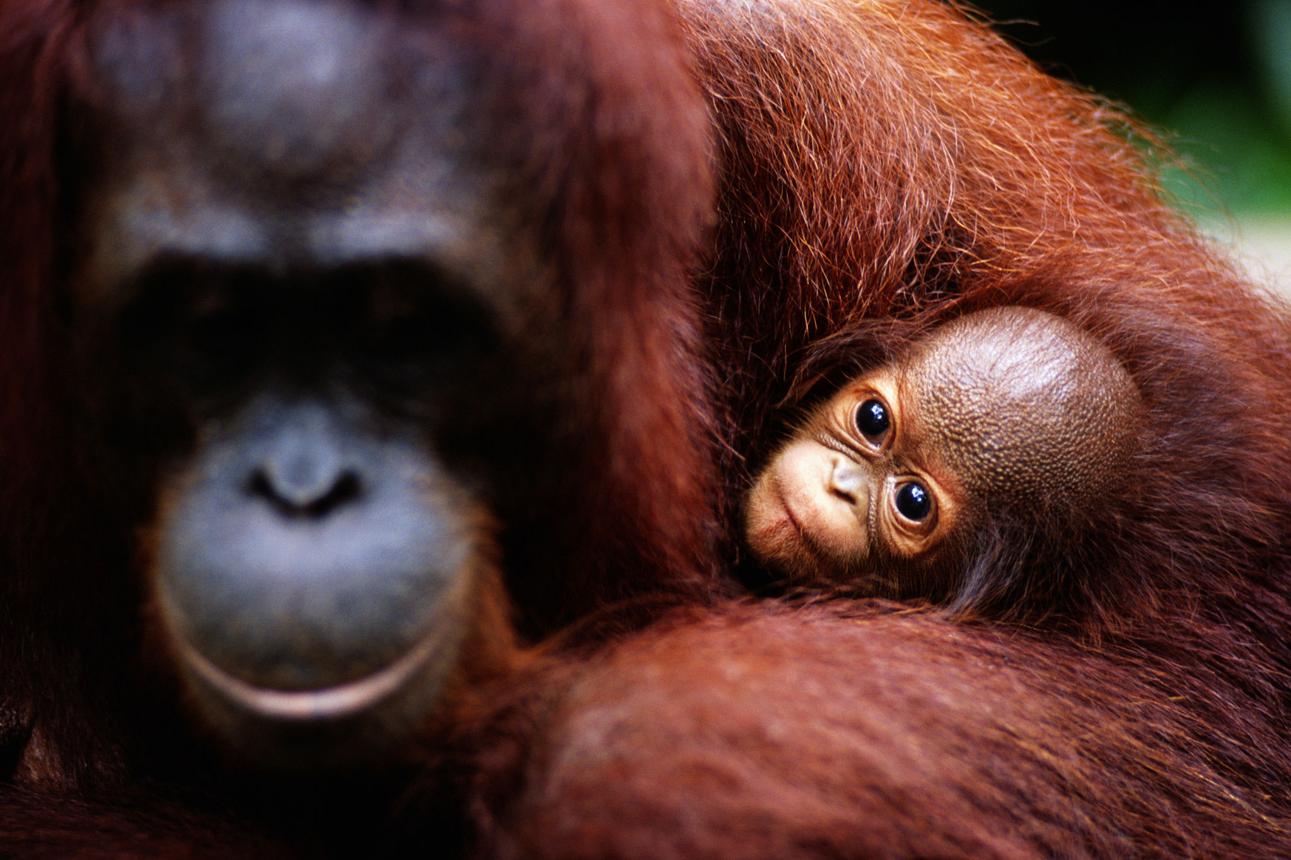
    Alt Text: Bornean orangutan mother carrying her young infant through a tropical rainforest canopy.

    Among all animals, orangutans have one of the longest childhoods outside humans.

    Young orangutans remain closely attached to their mothers for seven to nine years. During this time, they learn hundreds of survival skills that are essential for life in the rainforest.

    The mother teaches her offspring how to find seasonal fruits, identify edible plants, build sleeping nests high in trees, avoid predators, and navigate complex forest environments.

    Unlike many animals that rely mostly on instinct, orangutans depend heavily on learning.

    Because rainforest life is so challenging, young orangutans need years of instruction before becoming independent. This lengthy educational process makes orangutan mothers some of the most dedicated teachers in the animal kingdom.


    2. Cichlid Fish Turn Their Mouths into Nurseries

    Figure 2

    Alt Text: Female cichlid fish protecting baby fry inside her mouth underwater.

    Many fish provide little or no care for their offspring. Cichlids are a remarkable exception.

    Certain species practice a behavior known as mouthbrooding. After eggs are fertilized, one parent—often the mother—collects them inside the mouth.

    The eggs remain protected there while they develop.

    Even after hatching, tiny fry continue using the parent’s mouth as a safe shelter whenever danger approaches. At the first sign of a predator, dozens of babies may rush back inside.

    This unusual parenting strategy dramatically improves survival rates by providing a mobile refuge during the most vulnerable stage of life.


    3. Grebe Birds Give Their Chicks a Free Ride

    Figure 3

    Alt Text: Grebe parent swimming across a lake with chicks riding on its back.

    Grebes are aquatic birds found on lakes and wetlands around the world.

    Shortly after hatching, grebe chicks begin riding on their parents’ backs. The adults carefully transport them across open water while searching for food.

    The chicks often tuck themselves between the parent’s wings, remaining hidden and protected.

    This behavior reduces exposure to predators, prevents exhaustion, and helps young birds stay warm.

    Even more surprisingly, parents continue feeding the chicks while carrying them.

    The image of tiny birds riding on a parent’s back has become one of the most charming examples of childcare in the natural world.


    4. Elephant “Babysitters” Help Raise Calves

    Figure 4

    Alt Text: Young elephant calf surrounded by protective adult females in a herd.

    Elephants live in highly social family groups where parenting responsibilities are often shared.

    In addition to the mother, other females within the herd help care for calves. These helpers are known as allomothers.

    Allomothers may guard young elephants, assist them when crossing difficult terrain, and intervene when danger threatens.

    For first-time mothers, experienced relatives provide valuable support.

    Researchers believe this cooperative childcare system contributes significantly to the success of elephant populations. It also allows young females to gain parenting experience before having calves of their own.

    This shared approach to raising young is one of the most advanced forms of social childcare among mammals.


    5. Tasmanian Devils Compete for a Place in Mom’s Pouch

    Figure 5

    Alt Text: Tasmanian devil mother with tiny joeys developing inside her pouch.

    Tasmanian devils have a parenting challenge unlike almost any other mammal.

    A female may give birth to twenty or thirty tiny newborns at once. However, she possesses only four nipples inside her pouch.

    The newborns must race to reach the pouch immediately after birth. Once a baby attaches to a nipple, it may remain there for months.

    Because there are far more newborns than available feeding positions, only a few survive.

    Although this process seems harsh, it ensures that the strongest offspring receive the resources needed for healthy development.

    The competition begins almost immediately after birth, making Tasmanian devil parenting one of nature’s most unusual survival stories.


    6. Honey Bees Employ Dedicated Nursery Workers

    Figure 6

    Alt Text: Worker honey bees caring for larvae inside a honeycomb nursery.

    Honey bee colonies operate with remarkable efficiency, especially when caring for young.

    Specialized worker bees known as nurse bees are responsible for feeding and maintaining developing larvae.

    These workers inspect each larval cell, provide food, regulate temperature, and remove waste.

    Young larvae receive a nutrient-rich substance called royal jelly. Future queen bees receive even larger amounts, allowing them to develop differently from ordinary workers.

    Unlike most animals, parental care is not provided directly by parents but by thousands of related colony members.

    This collective childcare system has helped honey bees become one of the world’s most successful insect groups.


    7. Arctic Fox Parents Work Around the Clock

    Figure 7

    Alt Text: Arctic fox parents standing near a den with several playful pups.

    Life in the Arctic is difficult, especially for young animals.

    Arctic fox parents must raise pups in an environment characterized by freezing temperatures, limited food, and long periods of darkness.

    Both parents participate actively in childcare. While one adult guards the den, the other hunts for food.

    Foxes may travel many kilometers each day searching for prey to feed their growing family.

    The pups spend weeks inside the den before venturing outside. During this period, parents remain highly vigilant against predators such as wolves and birds of prey.

    The teamwork displayed by Arctic fox families is essential for survival in one of Earth’s harshest habitats.


    Why Animal Parenting Can Be So Different

    Animal parenting strategies evolve in response to environmental pressures.

    Species living in dangerous habitats often invest heavily in protection. Animals with complex diets or behaviors may devote years to teaching offspring. Social species frequently benefit from cooperative childcare.

    Each strategy reflects a balance between costs and benefits.

    Providing extensive parental care requires energy and time, but it often increases the chances that offspring will survive long enough to reproduce.

    Over millions of years, natural selection has shaped parenting behaviors that match the specific challenges faced by each species.


    Surprising Lessons From Animal Families

    Scientists studying animal parenting have discovered that many behaviors once considered uniquely human are widespread throughout nature.

    Teaching, cooperation, communication, adoption, and long-term family relationships occur in numerous species.

    Elephants support one another’s calves. Orangutans spend years educating offspring. Birds transport chicks on their backs, and fish carry babies in their mouths.

    These examples reveal that successful parenting takes many forms.

    Although animals differ greatly from humans, they often face similar challenges when raising the next generation.


    The Importance of Protecting Animal Families

    Conservation efforts frequently focus on protecting adult animals, but safeguarding family groups is equally important.

    When habitats are destroyed or populations decline, parenting behaviors can be disrupted.

    Species that rely on long learning periods, cooperative care, or specialized nesting sites may struggle to reproduce successfully.

    Protecting breeding grounds, migration routes, and social structures helps ensure that future generations can continue these remarkable parenting traditions.

    Understanding animal childcare also deepens our appreciation for the complexity of wildlife and the importance of preserving biodiversity.


    Conclusion

    The animal kingdom contains countless examples of extraordinary parenting. Orangutan mothers spend years teaching survival skills, cichlid fish carry babies inside their mouths, and grebe birds transport chicks on their backs.

    Elephants rely on cooperative babysitters, Tasmanian devils face intense competition for pouch space, honey bees employ dedicated nursery workers, and Arctic foxes work tirelessly to raise pups in one of the world’s toughest environments.

    These fascinating stories remind us that parenting is one of nature’s most powerful forces. Whether through sacrifice, cooperation, protection, or education, animals have evolved countless ways to help their young survive.

    Their remarkable efforts continue to inspire scientists and wildlife enthusiasts while revealing the incredible diversity of life on Earth.