Backstage, even the most hardened critics were visibly shaken. Among them was Simon Cowell, known for his cutting remarks and uncompromising honesty. But as she reached the heart of the performance, his usually steely composure melted into complete awe and disbelief. With his eyes wide and his jaw slack, Simon, a man known to rarely be at a loss for words, was left entirely speechless. His silence spoke volumes, instantly setting social media abuzz with excited chatter and fervent praise.
In that singular performance, she not only captured the essence of Whitney Houston’s iconic style but also imprinted her own identity upon the piece, transforming it into something new yet achingly familiar. Every note resonated with so much passion and depth that the audience felt as if they were witnessing a rebirth of a legend, a celebration of timeless talent that transcended generations.
After the final note had faded into a thunderous standing ovation, her eyes sparkled with relief and joy. Tears of elation streamed down faces all around, as viewers and critics alike began to share their thoughts on the overwhelming performance. Social media platforms exploded with praise, comparisons, and a flurry of hashtags celebrating the unforgettable moment. Interviews followed, with former doubters now questioning how someone so young could embody the spirit of such an iconic voice.
In the days that followed, her performance became the talk of the town. TV shows, blogs, and magazine features dissected every nuance of her act—every subtle inflection, every deliberate pause, and every electrifying high note. People marveled at the flawless mimicry of Whitney Houston’s style, yet no two reviews were exactly alike; some saw echoes of a bygone era, while others heralded the emergence of a new superstar in her own right.
That night, in a modest dressing room backstage, she sat quietly, still in disbelief at what she had just achieved. The memory of seeing Simon Cowell, one of the most discerning voices in the industry, rendered speechless was a humbling reminder that talent, when fused with passion and dedication, transcends all boundaries. As she prepared to leave the stage, an overwhelming feeling of gratitude washed over her—a gratitude for the opportunity to share her gift and for the support of an audience that recognized true artistry when they heard it.
Her journey was just beginning, and while she knew that there would be challenges ahead, that transformative performance had redefined her destiny. It was a night of magic, where every chord struck a chord in the hearts of those present, and where a single performance created ripples that would echo throughout the music industry for years to come. This was more than an act; it was an awakening, a powerful reminder that sometimes, under the bright lights of fame, legends are reborn.
7 Incredible Animal Stories from the Amazon Rainforest | Amazing Wildlife Facts
7 Incredible Animal Stories from the Amazon Rainforest: Nature’s Most Amazing Survivors
7 Incredible Animal Stories from the Amazon Rainforest: Nature’s Most Amazing Survivors
The Amazon Rainforest is often called the “lungs of the Earth,” but it is also one of the greatest wildlife sanctuaries on the planet. Stretching across nine South American countries and covering more than 5.5 million square kilometers, the Amazon is home to an estimated 10% of all known species. Hidden beneath its towering trees and winding rivers are remarkable animals with extraordinary survival stories that continue to fascinate scientists and nature lovers alike.
From tiny frogs carrying poison powerful enough to stop predators to intelligent river dolphins that navigate muddy waters using sonar, every creature in the Amazon has evolved unique adaptations to survive in one of Earth’s most competitive ecosystems.
Here are seven incredible animal stories that showcase the wonder, intelligence, and resilience of Amazon wildlife.
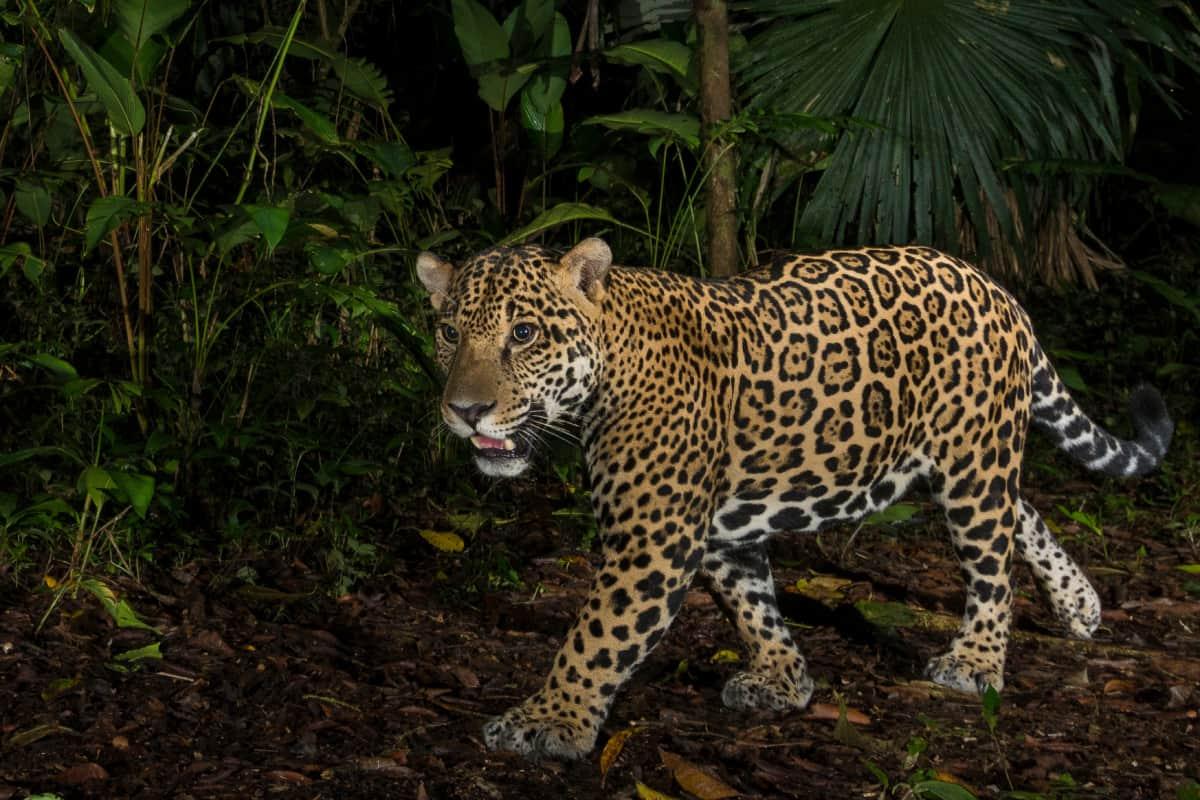
1. The Jaguar: The Silent King of the Jungle
Alt Text: Jaguar walking silently through the Amazon rainforest.
The jaguar is the largest cat in the Americas and the undisputed apex predator of the Amazon. Unlike most big cats, jaguars are exceptional swimmers and often hunt in rivers and wetlands.
Their incredibly powerful bite can pierce turtle shells and even the skulls of caimans. Rather than chasing prey over long distances, jaguars rely on patience and stealth, quietly stalking animals before launching a lightning-fast ambush.
These magnificent cats play an essential role in maintaining ecological balance by controlling populations of deer, capybaras, and other mammals. Unfortunately, habitat destruction and illegal hunting continue to threaten their future.
2. The Pink River Dolphin: The Amazon’s Gentle Mystery
Alt Text: Pink river dolphin swimming through the Amazon River.
One of the Amazon’s most unusual residents is the pink river dolphin, also known as the boto. Unlike ocean dolphins, these freshwater mammals have flexible necks that allow them to maneuver through flooded forests during the rainy season.
Young dolphins are gray, gradually turning pink as they mature. Scientists believe their pink coloration develops from age, scars, and increased blood flow near the skin.
Local folklore tells stories of dolphins transforming into handsome humans at night, but their real-life abilities are equally magical. Using echolocation, they can locate fish in muddy water where visibility is almost zero.
Sadly, pollution and accidental capture in fishing nets are reducing their populations throughout the Amazon Basin.
3. The Poison Dart Frog: Tiny but Powerful
Alt Text: Brightly colored poison dart frog resting on a rainforest leaf.
Despite measuring only a few centimeters long, poison dart frogs are among the most toxic animals on Earth.
Their brilliant blue, yellow, orange, and red colors warn predators to stay away. Some species produce toxins capable of causing paralysis or even death.
Interestingly, frogs raised in captivity lose much of their toxicity because they no longer consume the wild insects responsible for producing these chemicals.
Indigenous communities have historically used the frogs’ toxins on hunting darts, giving the animals their famous name.
4. The Leafcutter Ant: The Farmer of the Rainforest
Alt Text: Leafcutter ants carrying pieces of green leaves.
Leafcutter ants are among the hardest-working insects in the Amazon.
Every day, millions of ants march through the forest carrying leaf fragments much larger than themselves. Surprisingly, they do not eat the leaves directly.
Instead, they use them to cultivate underground fungus gardens that serve as their primary food source. This sophisticated farming system evolved millions of years before humans developed agriculture.
A single colony may contain several million ants working together with incredible organization and efficiency.
5. The Green Anaconda: Master of the Amazon Waters
Alt Text: Massive green anaconda resting in shallow Amazon water.
The green anaconda is one of the world’s largest and heaviest snakes.
Although often portrayed as aggressive in movies, these giant reptiles generally avoid humans whenever possible.
They spend most of their lives in rivers, swamps, and flooded forests, waiting patiently for prey to come within striking distance. Their muscular bodies allow them to overpower animals such as capybaras, caimans, and even deer.
Anacondas are excellent swimmers and can remain submerged for long periods, with only their eyes and nostrils visible above the water.
6. The Harpy Eagle: The Sky Hunter
Alt Text: Harpy eagle perched high in the Amazon rainforest canopy.
The harpy eagle is one of the world’s largest and most powerful birds of prey.
Its massive talons are comparable in size to a grizzly bear’s claws and are strong enough to capture monkeys and sloths directly from the treetops.
Harpy eagles require vast areas of undisturbed forest for hunting, making them vulnerable to deforestation.
Despite their fearsome appearance, these majestic birds are shy and rarely seen in the wild, making every sighting a remarkable experience for researchers.
7. The Glass Frog: Nature’s Transparent Wonder
Alt Text: Transparent glass frog resting beneath a rainforest leaf.
Glass frogs are among the Amazon’s most extraordinary amphibians.
Their undersides are almost transparent, allowing observers to see their internal organs. This remarkable adaptation helps camouflage them against leaves, making it harder for predators to detect them.
Male glass frogs are devoted fathers. After females lay eggs on leaves above streams, males remain nearby to guard them from insects and other predators until they hatch.
Their dedication significantly increases the survival chances of the next generation.
Why Amazon Wildlife Matters
The Amazon Rainforest is much more than a collection of remarkable animals. It regulates global climate, stores enormous amounts of carbon, and supports millions of people who depend on its natural resources.
Unfortunately, illegal logging, mining, wildfires, and expanding agriculture continue to threaten this irreplaceable ecosystem. Every species—from the mighty jaguar to the tiny glass frog—plays a vital role in maintaining the delicate balance of rainforest life.
Protecting the Amazon means protecting one of Earth’s greatest natural treasures for future generations.
Final Thoughts
The Amazon Rainforest reminds us that nature is filled with extraordinary stories waiting to be discovered. Whether it’s a jaguar silently stalking its prey, a pink dolphin navigating muddy rivers, or millions of ants farming fungus beneath the forest floor, each animal has evolved incredible adaptations that inspire wonder.
As conservation efforts continue around the world, learning about these fascinating creatures is one of the first steps toward protecting them. By appreciating the Amazon’s rich biodiversity, we can all play a small part in ensuring these amazing wildlife stories continue for generations to come.
Discover seven incredible animal stories from the Amazon Rainforest, featuring jaguars, pink river dolphins, poison dart frogs, harpy eagles, anacondas, and more. Learn how these remarkable creatures survive in one of Earth’s richest ecosystems.
Backstage, even the most hardened critics were visibly shaken. Among them was Simon Cowell, known for his cutting remarks and uncompromising honesty. But as she reached the heart of the performance, his usually steely composure melted into complete awe and disbelief. With his eyes wide and his jaw slack, Simon, a man known to rarely be at a loss for words, was left entirely speechless. His silence spoke volumes, instantly setting social media abuzz with excited chatter and fervent praise.
In that singular performance, she not only captured the essence of Whitney Houston’s iconic style but also imprinted her own identity upon the piece, transforming it into something new yet achingly familiar. Every note resonated with so much passion and depth that the audience felt as if they were witnessing a rebirth of a legend, a celebration of timeless talent that transcended generations.
After the final note had faded into a thunderous standing ovation, her eyes sparkled with relief and joy. Tears of elation streamed down faces all around, as viewers and critics alike began to share their thoughts on the overwhelming performance. Social media platforms exploded with praise, comparisons, and a flurry of hashtags celebrating the unforgettable moment. Interviews followed, with former doubters now questioning how someone so young could embody the spirit of such an iconic voice.
In the days that followed, her performance became the talk of the town. TV shows, blogs, and magazine features dissected every nuance of her act—every subtle inflection, every deliberate pause, and every electrifying high note. People marveled at the flawless mimicry of Whitney Houston’s style, yet no two reviews were exactly alike; some saw echoes of a bygone era, while others heralded the emergence of a new superstar in her own right.
That night, in a modest dressing room backstage, she sat quietly, still in disbelief at what she had just achieved. The memory of seeing Simon Cowell, one of the most discerning voices in the industry, rendered speechless was a humbling reminder that talent, when fused with passion and dedication, transcends all boundaries. As she prepared to leave the stage, an overwhelming feeling of gratitude washed over her—a gratitude for the opportunity to share her gift and for the support of an audience that recognized true artistry when they heard it.
Her journey was just beginning, and while she knew that there would be challenges ahead, that transformative performance had redefined her destiny. It was a night of magic, where every chord struck a chord in the hearts of those present, and where a single performance created ripples that would echo throughout the music industry for years to come. This was more than an act; it was an awakening, a powerful reminder that sometimes, under the bright lights of fame, legends are reborn.
The Ocean’s Greatest Giant: The Incredible True Story of the Megalodon Shark That Once Ruled the Seas
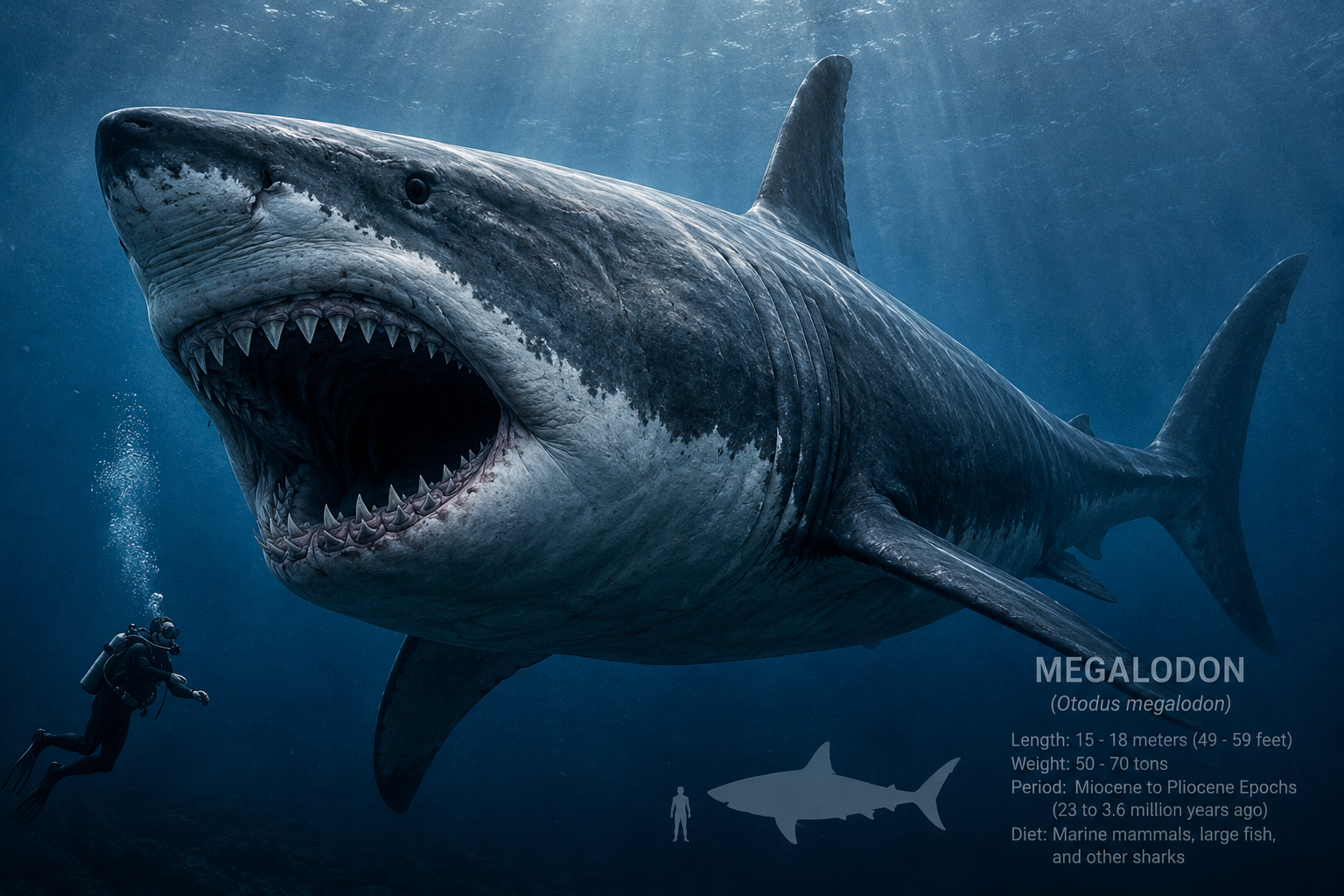
Imagine standing on the deck of a ship and looking into the ocean below. Suddenly, a shark longer than a school bus glides beneath the waves. Its mouth is large enough to swallow two adults standing side by side, and each tooth is nearly the size of a human hand.
It sounds like something from a Hollywood movie—but millions of years ago, such a predator really existed.
Meet Megalodon, one of the largest and most powerful sharks ever to inhabit Earth’s oceans. Although it became extinct long before humans appeared, this legendary predator continues to fascinate scientists, filmmakers, and ocean lovers alike. Fossil discoveries around the world have revealed an extraordinary animal that dominated ancient seas for millions of years.
A Giant Unlike Any Shark Alive Today
The scientific name of the Megalodon is Otodus megalodon. It lived approximately 23 million to 3.6 million years ago, during the Miocene and Pliocene epochs.
Unlike the modern great white shark, Megalodon reached astonishing dimensions. Current scientific estimates suggest adults commonly measured around 50 to 65 feet (15–20 meters) in length, making them among the largest predatory fish ever known.
Its massive jaws were lined with hundreds of serrated teeth designed to slice through flesh and bone. Some fossil teeth measure more than 7 inches (18 centimeters) long, making them the largest shark teeth ever discovered.
These enormous teeth are among the main reasons scientists know so much about the species today.
Built to Hunt Giants
Millions of years ago, Earth’s oceans looked very different.
Large whales, seals, dolphins, sea cows, and giant sea turtles filled warm coastal waters. Megalodon evolved into an apex predator capable of hunting many of these animals.
Researchers believe it preferred large marine mammals because they provided enormous amounts of energy.
Fossil whale bones discovered in several countries show bite marks matching Megalodon’s distinctive serrated teeth.
Some skeletons even reveal partially healed wounds, suggesting a few whales survived attacks before later dying from other causes.
Scientists think Megalodon often targeted the fins or tail first, preventing prey from escaping before delivering a fatal bite.
How Powerful Was Its Bite?
Few animals in Earth’s history possessed jaws as powerful as Megalodon’s.
Biomechanical studies estimate that its bite force may have exceeded 100,000 newtons, making it one of the strongest bites ever calculated for any vertebrate.
Such incredible force allowed the shark to crush bones and penetrate thick whale skeletons.
Unlike many modern sharks that swallow smaller prey whole, Megalodon could dismantle enormous animals piece by piece.
Its gigantic body required vast amounts of food, making efficient hunting essential for survival.
Fossils Found Around the World
Unlike dinosaur skeletons, complete Megalodon skeletons have never been found because shark skeletons are made mostly of cartilage, which rarely fossilizes.
Instead, scientists rely primarily on fossilized teeth and vertebrae.
Thousands of Megalodon teeth have been discovered on nearly every continent, including North America, South America, Europe, Africa, Asia, and Australia.
Many fossils are found in riverbeds, coastal cliffs, and ancient seabeds that were once underwater millions of years ago.
Collectors highly value these fossils because of their impressive size and excellent preservation.
Some museums display teeth that are larger than an adult’s palm.
Why Did Megalodon Disappear?
Perhaps the greatest mystery surrounding Megalodon is its extinction.
Scientists believe several factors combined to end the reign of this giant predator.
As Earth’s climate cooled, sea levels changed and many warm coastal habitats disappeared.
At the same time, many marine mammals evolved new migration patterns or moved into colder waters beyond Megalodon’s preferred range.
Competition may also have increased.
Smaller, faster predators—including the ancestors of modern great white sharks and early killer whales—likely competed for similar prey.
Because Megalodon required enormous quantities of food, even modest environmental changes could have placed tremendous pressure on the species.
Around 3.6 million years ago, the fossil record indicates Megalodon vanished.
Is the Megalodon Still Alive?
Despite countless internet rumors and fictional movies, there is no scientific evidence that Megalodon survives today.
Modern oceans have been explored extensively by researchers, commercial fisheries, submarines, and satellite technology.
An animal of Megalodon’s size would require huge food resources and would almost certainly leave unmistakable evidence, including fresh teeth, carcasses, DNA traces, or verified sightings.
None have been found.
Stories claiming that Megalodon still lurks in deep ocean trenches remain fictional and are not supported by marine science.
Its legend survives because its true size was already astonishing enough.
Why Megalodon Still Captivates the World
Few prehistoric animals capture human imagination quite like Megalodon.
Its enormous teeth are among the most recognizable fossils ever discovered.
It has inspired documentaries, novels, museum exhibits, and blockbuster films.
For paleontologists, Megalodon provides valuable insight into the evolution of sharks, ancient marine ecosystems, and how environmental change can reshape life on Earth.
Every new fossil helps researchers refine estimates of its size, behavior, and hunting strategies.
Although it vanished millions of years ago, the giant shark continues to teach scientists about oceans that existed long before humans.
Lessons From an Ancient Giant
The story of Megalodon is not simply about the biggest shark that ever lived.
It is also a reminder that even the most dominant predators are vulnerable to changing environments.
For millions of years, Megalodon ruled the seas with unmatched power.
Then shifting climates, changing ecosystems, and evolving competitors gradually ended its reign.
Today, only fossils remain—but those fossils tell one of the greatest stories in natural history.
Every massive tooth found along an ancient shoreline is a message from a world that disappeared long before people walked the Earth.
And although Megalodon no longer patrols our oceans, its legacy continues to inspire curiosity, scientific discovery, and awe in anyone who imagines what it must have been like to share the sea with the greatest shark of all time.
Image Alt Text (6–7 Images)
Artist’s reconstruction of a giant Megalodon swimming through a prehistoric ocean.
Size comparison between a Megalodon and a modern great white shark.
Fossil Megalodon teeth displayed in a natural history museum.
Artistic scene of a Megalodon hunting ancient whales.
Paleontologist examining a large Megalodon fossil tooth.
Ancient ocean ecosystem featuring Megalodon and prehistoric marine life.
Illustration comparing the size of a Megalodon with a human diver.
SEO Meta Description
Explore the incredible true story of the Megalodon, the largest shark ever to live. Discover its immense size, powerful bite, fossil discoveries, hunting habits, extinction, and the science behind one of history’s greatest marine predators.
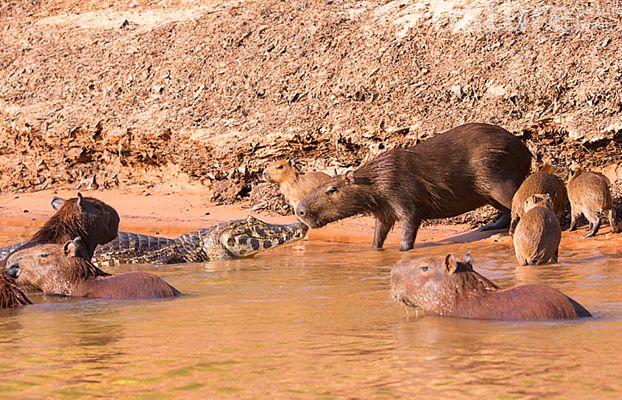
Featured Image Alt Text: Capybara calmly resting among different animal species near water.
The Animal That Makes Friends With Everyone: Why Even Crocodiles Rarely Fight With the Capybara
Most animals have enemies.
Some defend territory. Others compete for food. Many avoid strangers entirely.
But one animal seems to ignore all those rules.
Meet the capybara—the world’s largest rodent and possibly one of nature’s most peaceful creatures.
Across South America, capybaras have become famous for something unusual: they are regularly seen relaxing beside birds, sharing space with monkeys, tolerating cats and dogs, and sometimes even sitting surprisingly close to crocodilians without conflict.
It almost looks impossible.
How does one animal seem to get along with nearly everyone?
A Giant Rodent With an Unexpected Personality
Capybaras live in wetlands, rivers, and grassy areas where many other species gather.
Unlike highly territorial animals, capybaras are social and calm.
They usually live in groups and spend much of their day eating grasses, resting, swimming, and staying alert for danger.
Because they are herbivores, they do not compete with predators for food.
That alone reduces many possible conflicts.
Their relaxed body language also appears to make other animals less defensive.
Why Birds Love Capybaras
One of the most common wildlife scenes shows birds standing directly on capybaras.
Small birds often search for insects around their bodies or simply use them as safe resting places.
Capybaras rarely react aggressively.
Instead of chasing visitors away, they usually continue resting.
This creates the appearance of an open invitation.
The Strange Relationship With Crocodilians
Perhaps the most surprising images show capybaras sitting near crocodilians.
In South America, capybaras sometimes share water environments with caimans.
To people, it looks like an impossible friendship.
But reality is more complicated.
Capybaras remain cautious and stay aware of danger.
At the same time, crocodilians do not attack constantly. Predators conserve energy and often ignore animals unless hunting conditions are favorable.
Because capybaras are calm and predictable, peaceful moments can happen—and photographers capture them.
That does not mean capybaras are immune from predation.
It simply means nature is often more peaceful than people expect.
Friends Across Species
Capybaras have become famous for accepting company from many animals.
Not Photoshop: 7 Animals Born in Colors So Strange Scientists Had to Look Twice
If someone showed you an orange penguin or a black flamingo, you might assume the image had been edited.
But nature occasionally produces animals with colors so unusual that even researchers stop and stare.
Most species develop colors that help them survive—camouflage, warning signals, temperature control, or attracting mates. Yet every so often, genetics creates something unexpected.
These animals are not new species.
They are simply extraordinary versions of familiar ones.
Here are seven real examples of animals born with colors that made them look almost impossible.
1. The Orange Penguin That Shocked Wildlife Photographers
Penguins are famous for their black-and-white appearance.
That’s why photographers were stunned when an unusually orange-colored penguin appeared.
Scientists believe rare pigment abnormalities can reduce darker feather colors and create lighter golden or orange tones.
The result looked less like a penguin and more like a tropical bird.
Alt Text: Rare orange-colored penguin standing among ordinary penguins.
2. The White Crow That Lost Its Darkness
Crows are symbols of glossy black feathers.
But occasionally, a crow appears almost completely white.
This unusual appearance often results from leucism—a condition that reduces pigment while preserving normal eye color.
White crows attract enormous attention because they break one of nature’s most recognizable color patterns.
Alt Text: Rare white crow perched outdoors with pale feathers.
3. The Golden Turtle That Looked Metallic
Most turtles disappear into mud, rocks, and vegetation.
Then there are the rare yellow or golden individuals.
Their shells can appear bright enough to look painted.
Researchers study these rare color changes to better understand reptile pigmentation.
Alt Text: Golden-colored turtle with unusual bright shell.
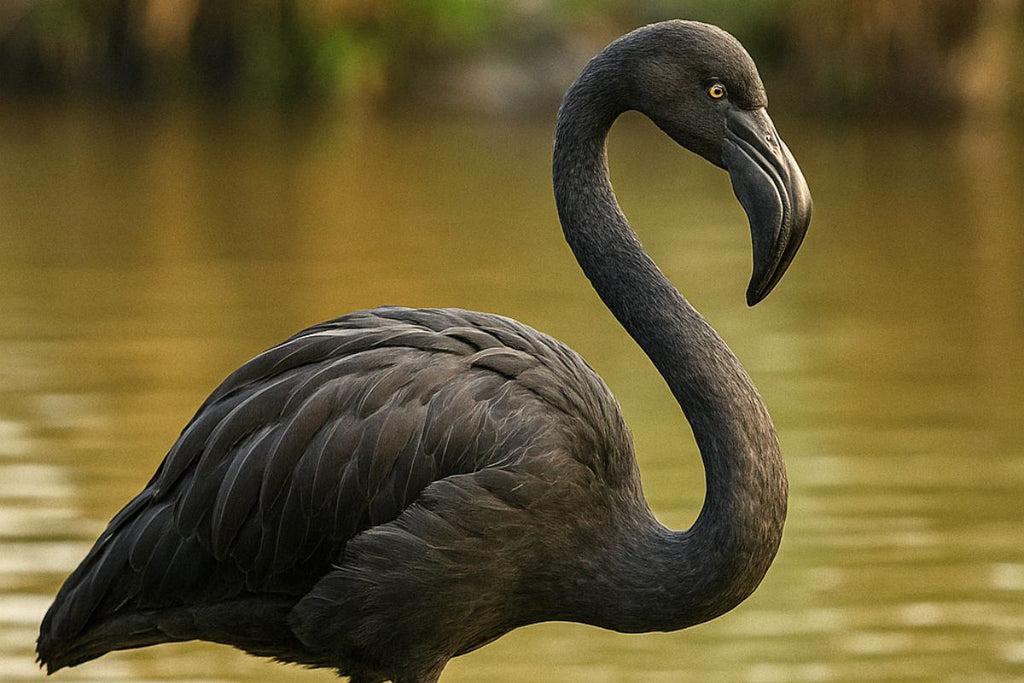
4. The Nearly Black Flamingo
Flamingos are famous for pink feathers.
A black flamingo sounds impossible.
Yet rare individuals with unusually dark pigment have been documented.
The contrast creates one of the strangest sights in bird watching—a bird known for brightness appearing almost shadow-colored.
Alt Text: Rare dark flamingo standing among pink flamingos.
5. The White Moose That Became a Legend
Moose are usually dark brown and blend into forests.
But rare white moose can appear almost glowing between trees.
Unlike albino animals, many retain normal eyes and are believed to carry reduced pigmentation rather than complete pigment loss.
People who see one often describe the experience as unforgettable.
Alt Text: Rare white moose walking through woodland.
6. The Yellow Cobra That Looks Unreal
Cobras usually rely on darker colors for protection and concealment.
Occasionally, rare yellow individuals appear because of unusual genetic traits.
Their bright color transforms one of the world’s most recognizable snakes into something that seems almost fictional.
Alt Text: Yellow cobra displaying unusual bright coloration.
7. The Red Banana Slug
Slugs may not sound exciting—until one appears bright red.
Some banana slug color variations develop intense orange or red shades that stand out dramatically against forest floors.
These strange colors remind us that unusual pigmentation is not limited to large or famous animals.
Alt Text: Bright red banana slug moving across a forest surface.
Why Does Nature Create These Color Surprises?
Color mutations usually happen because pigment-producing cells behave differently during development.
These changes can create animals that are:
• Lighter than normal • Darker than normal • More colorful than expected • Completely unlike their own species
Many unusual color variations reduce camouflage, making survival harder.
But for people lucky enough to see them, they become unforgettable reminders that nature still creates surprises no one expects.
Sometimes the rarest animal is not the rarest species—
Born Different: 7 Animals With Stunning Color Mutations That Made Them Look Like Another Species
Born Different: 7 Animals With Stunning Color Mutations That Made Them Look Like Another Species
Nature usually follows familiar patterns. Zebras wear black-and-white stripes. Lobsters appear dark green or brown. Penguins arrive in classic tuxedo colors.
But sometimes, nature surprises everyone.
Across the world, a tiny number of animals are born with unusual pigments that transform their appearance completely. Some turn pure white. Others become golden, blue, pink, or nearly black. These color differences can make them look like entirely different species.
Scientists often link these unusual appearances to rare genetic mutations affecting pigment production. While these animals may look magical, their strange colors can bring both advantages and challenges in the wild.
Here are seven remarkable examples of animals born unlike the rest of their species.
1. The White Alligator That Looked Like a Mythical Creature
At first glance, a white alligator barely looks real.
Most alligators develop dark olive skin that helps them hide in muddy water. But a rare genetic condition called leucism reduces normal pigmentation, leaving the animal with pale or nearly white skin.
Unlike complete albinism, leucistic animals may still retain some normal eye coloration.
White alligators face major survival challenges in the wild. Their bright appearance makes camouflage difficult, leaving them easier to spot by predators and prey alike.
Because of this, many documented white alligators live under protected conditions rather than surviving independently in nature.
Image Alt Text: Rare white alligator resting near water with pale scales and light eyes.
2. The Pink Grasshopper That Looks Digitally Edited
Imagine walking through a green field and spotting a bubblegum-pink grasshopper.
It sounds impossible—but pink grasshoppers are real.
Their unusual appearance is often linked to a rare pigment condition called erythrism, which causes excessive red or pink coloration.
While ordinary grasshoppers blend easily into vegetation, pink individuals stand out dramatically.
Scientists believe these unusual insects may appear only once in hundreds of thousands of individuals, making every sighting memorable.
Unfortunately, visibility can also become a disadvantage because camouflage is essential for survival.
Image Alt Text: Bright pink grasshopper sitting on a green leaf in natural sunlight.
3. The Blue Lobster That Defies Ocean Expectations
Blue lobsters have become internet celebrities—but they are genuinely rare.
Most lobsters carry dark shell colors that help them remain hidden along the ocean floor. In rare cases, genetic changes cause an overproduction of certain proteins linked to shell pigmentation.
The result is a brilliant electric-blue shell.
Some estimates suggest blue lobsters appear only once in millions of individuals.
Fishermen occasionally discover them and choose to donate them to aquariums rather than sell them.
Their unusual appearance has helped turn them into symbols of rare natural beauty.
Image Alt Text: Rare blue lobster with vivid shell coloration underwater.
4. The Golden Zebra That Lost Its Signature Stripes
Zebras are famous for one thing: bold black stripes.
But a few rare individuals are born with reduced dark pigmentation, creating pale gold or blond coloring.
These animals still retain stripe patterns—but the colors appear softer and much lighter than usual.
Researchers believe unusual pigment expression during development may alter stripe intensity.
Because zebras depend partly on visual group patterns, scientists continue studying whether these color differences affect social behavior.
To observers, however, they look almost unreal.
Image Alt Text: Rare golden zebra standing in grassland with pale stripe coloration.
5. The Dark Penguin Wearing a Reverse Tuxedo
Penguins are icons of black-and-white contrast.
Yet some are born with melanism, a condition that produces excessive dark pigment.
Instead of white bellies and balanced patterns, these individuals appear dramatically darker.
Scientists have observed melanistic penguins in several species, creating birds that almost look redesigned.
Color changes may influence heat absorption and recognition within colonies, although research continues.
Their appearance reminds us that even one of the world’s most recognizable animals can break its own rules.
Image Alt Text: Dark-colored penguin with unusual black plumage standing among normal penguins.
6. The Snow-White Deer That Became a Local Legend
White deer have inspired legends for centuries.
Many owe their appearance to albinism or leucism—conditions that reduce normal pigment production.
With bright coats and striking appearances, these deer often become local celebrities whenever spotted.
But life can be difficult.
Reduced camouflage and, in some cases, vision sensitivity may create additional survival pressures.
Even so, their graceful appearance continues to fascinate photographers and wildlife enthusiasts.
Image Alt Text: White deer standing quietly inside a forest clearing.
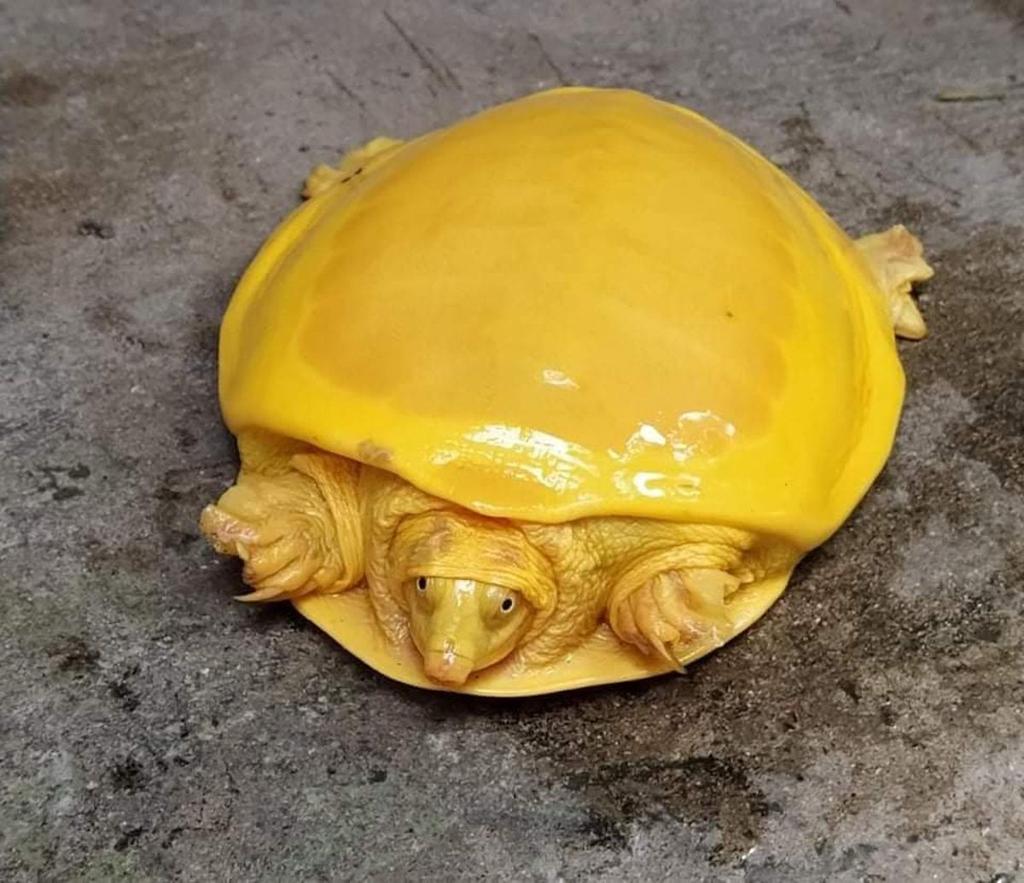
7. The Yellow Turtle That Looked Like It Was Painted
Most turtles rely on muted greens, browns, and dark patterns.
Occasionally, however, a turtle emerges with unusually bright yellow coloring caused by pigment abnormalities.
These turtles immediately attract attention because their shells and skin can appear almost glowing.
Scientists view such cases as valuable opportunities to understand how genes influence coloration across reptile species.
To the public, they simply look unforgettable.
Image Alt Text: Rare yellow turtle displaying unusual bright shell and skin coloration.
Why Do These Strange Colors Happen?
Unusual animal colors usually result from changes in pigment-producing cells or inherited genetic variations.
Some common causes include:
Albinism – little or no melanin production
Leucism – reduced overall pigmentation
Melanism – excess dark pigment
Erythrism – increased red or pink coloration
Unique genetic mutations affecting color proteins
While these differences can make animals famous, survival in the wild often becomes harder because camouflage plays such an important role.
Still, every rare-colored animal offers a reminder that nature never repeats itself perfectly.
Sometimes the most extraordinary creatures are not new species at all—they are simply familiar animals born in colors nobody expected.
Nature’s Rarest Wonders: 7 Animals Born With Astonishing Colors That Defy Their Species
Nature’s Rarest Wonders: 7 Animals Born With Astonishing Colors That Defy Their Species
Nature is full of surprises. While most animals are born with colors that help them survive in their environments, some are born with extraordinary appearances that make them look completely different from others of their species.
These unusual colors are often caused by rare genetic mutations that affect pigmentation. In some cases, the mutation removes color entirely. In others, it creates darker, brighter, or even completely unexpected shades.
Although these animals may appear magical, their unique coloration can make life more difficult. They often struggle to camouflage themselves, avoid predators, or find mates.
Here are seven fascinating examples of animals born with colors so unusual that they seem almost unreal.
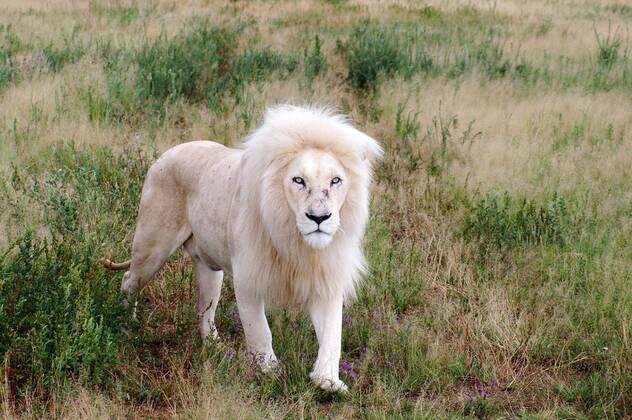
1. The White Lion: A Ghost of the Savannah
Lions are normally golden-brown, allowing them to blend into dry grasslands while hunting.
However, a rare genetic condition sometimes produces white lions.
Unlike albino animals, white lions still have normal eye and skin pigmentation. Their pale appearance is caused by a recessive gene known as leucism, which reduces pigment in the fur.
White lions are incredibly rare in the wild. Their bright coats make camouflage difficult, especially during hunts.
Despite these challenges, white lions remain among the most beautiful and mysterious animals ever documented.
Many people mistake them for mythical creatures when they first see photographs.
2. The Pink Grasshopper That Looks Like a Toy
One of the strangest color mutations ever recorded occurs in grasshoppers.
While most grasshoppers are green or brown, a tiny percentage are born bright pink.
Scientists believe the unusual color results from a genetic condition called erythrism, which causes excessive red pigmentation.
Pink grasshoppers are extremely rare, with some estimates suggesting only one in several hundred thousand develops this coloration.
Because they stand out dramatically against vegetation, they are easier for birds and predators to spot.
Even so, every time a pink grasshopper is discovered, photographs quickly spread across the internet because of its incredible appearance.
3. The Black Penguin That Shocked Researchers
Penguins are famous for their black-and-white coloring.
Occasionally, however, a rare condition called melanism causes some penguins to develop unusually dark feathers.
Instead of displaying the classic tuxedo appearance, melanistic penguins may appear almost entirely black.
Wildlife researchers have documented a small number of these unusual birds in Antarctica and South America.
The condition occurs when the body produces excessive amounts of melanin, the pigment responsible for dark coloration.
These rare penguins often attract attention from both scientists and wildlife photographers due to their extraordinary appearance.
4. The White Giraffe That Became a Legend
Few animals have attracted as much global attention as the rare white giraffes discovered in East Africa.
Their pale appearance is caused by leucism, a genetic condition that reduces skin pigmentation while maintaining normal eye color.
Unlike ordinary giraffes, these animals appear almost completely white.
When one of these giraffes was first photographed, many people believed the images had been digitally altered.
However, the animals were real.
Conservationists reported several sightings over the years, turning the white giraffe into an international wildlife sensation.
Their unusual appearance made them easy to recognize, but unfortunately, it also made them vulnerable to human threats.
5. The Golden Zebra That Looks Nothing Like a Zebra
Zebras are known worldwide for their distinctive black-and-white stripes.
Yet rare genetic mutations can dramatically alter this familiar pattern.
A condition known as amelanism reduces dark pigmentation, creating zebras with golden-brown stripes instead of black ones.
The result is a striking animal that appears almost golden under sunlight.
These rare zebras have been observed in parts of Africa and occasionally in wildlife reserves.
Researchers believe the mutation is extremely uncommon.
To many observers, golden zebras look more like a completely different species than a variation of an ordinary zebra.
6. The Albino Deer That Seems Almost Magical
White deer have fascinated people for centuries.
Legends and folklore often describe them as symbols of luck, mystery, or spiritual significance.
In reality, albino deer owe their appearance to a genetic mutation that prevents the production of melanin.
Unlike leucistic animals, albino deer typically have pink eyes and pink noses.
Because their coloration makes camouflage difficult, they face greater risks from predators.
Despite these challenges, sightings of albino deer continue to captivate wildlife enthusiasts around the world.
Many communities even consider them local treasures.
7. The Bright Orange Lobster That Defied the Odds
Most lobsters are dark green, brown, or bluish while alive.
A bright orange lobster is extraordinarily rare.
Scientists estimate the odds of finding one may be as low as one in 30 million.
The unusual coloration results from a genetic mutation that alters pigment production.
Because orange lobsters are highly visible, they would struggle to hide from predators in the wild.
Fortunately, many discovered orange lobsters are transferred to aquariums rather than being sold for food.
Their vibrant color makes them instant attractions wherever they are displayed.
Why Do These Strange Colors Happen?
Most unusual animal colors result from genetic mutations affecting pigmentation.
Some of the most common conditions include:
• Albinism – Complete absence of melanin, producing white skin, fur, feathers, and often pink eyes.
• Leucism – Partial loss of pigmentation while maintaining normal eye color.
• Melanism – Excessive dark pigmentation, causing animals to appear much darker than normal.
• Erythrism – Increased red pigmentation, producing reddish or pink coloration.
These conditions are usually rare and occur naturally in wild populations.
The Challenges of Being Different
Although these animals look extraordinary, their unusual appearance often creates survival challenges.
Camouflage is one of the most important defenses in nature.
Animals with unusual colors frequently stand out against their surroundings.
This makes them easier for predators to locate.
In some species, unusual coloration can also affect social interactions and mating opportunities.
However, many of these animals survive and thrive despite the challenges they face.
Their existence demonstrates the incredible diversity of life on Earth.
Nature’s Living Masterpieces
From white lions and white giraffes to pink grasshoppers and orange lobsters, these remarkable animals remind us that nature is capable of producing astonishing surprises.
Every rare color mutation tells a unique story about genetics, evolution, and survival.
Although many of these animals are seen only rarely, their photographs continue to amaze millions of people around the world.
They serve as living reminders that even in a world filled with familiar creatures, nature still has the power to surprise us.
And sometimes, the rarest wonders are the ones that look completely different from everyone else around them.
Additional Images for the Article
Image 1 – White Lion
Alt Text: Rare white lion displaying an unusual genetic color variation.
Image 2 – Pink Grasshopper
Alt Text: Rare pink grasshopper caused by a genetic pigmentation mutation.
Image 3 – Black Penguin
Alt Text: Unusual melanistic penguin with mostly black feathers.
Image 4 – White Giraffe
Alt Text: Extremely rare white giraffe standing in the African savannah.
Image 5 – Golden Zebra
Alt Text: Rare golden zebra with brownish stripes instead of black.
Image 6 – Albino Deer
Alt Text: Albino deer with white fur and pink eyes in a forest.
Image 7 – Orange Lobster
Alt Text: Extremely rare orange lobster caused by a genetic mutation.
Sea Giants: The Story of the Largest Lobster in the Ocean
Introduction
Deep beneath the cold waters of the North Atlantic lives one of the ocean’s most impressive crustaceans—the giant lobster. While most people imagine lobsters as seafood served at restaurants, these remarkable animals can grow to astonishing sizes and live far longer than many realize.
Among all known lobsters, the American lobster holds the record as the largest lobster species in the world. Some individuals have reached extraordinary dimensions, turning these creatures into legends of the sea.
Meet the Ocean’s Heavyweight
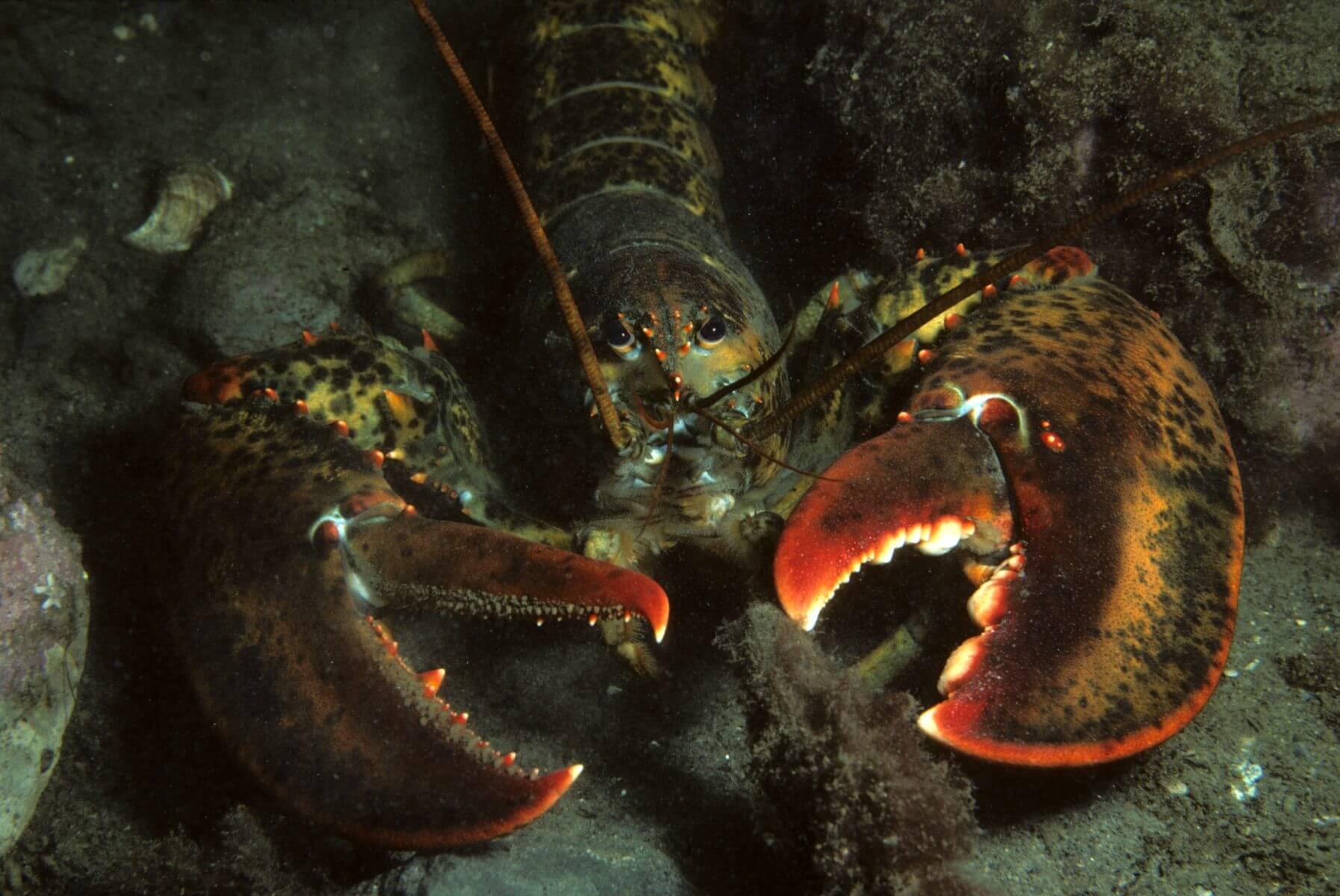
The American lobster (Homarus americanus) is found mainly along the Atlantic coast of North America. These powerful crustaceans inhabit rocky seabeds where they hide among crevices and search for food.
Most adult lobsters weigh only a few pounds, but under ideal conditions they continue growing throughout life because they shed their shells in a process called molting. Unlike many animals that stop growing after adulthood, lobsters can keep increasing in size for decades.
This unusual growth pattern has allowed a few exceptional individuals to become truly gigantic.
The Largest Lobster Ever Recorded
The largest documented lobster ever recorded weighed approximately 44 pounds (20 kilograms) and measured around 3.5 feet (over 1 meter) long.
Captured near Nova Scotia in 1977, this enormous American lobster became famous worldwide and remains one of the biggest verified specimens ever documented.
To put that into perspective, that lobster weighed about as much as a medium-sized dog.
Scientists believe reaching this size requires a rare combination of factors:
Long lifespan
Cold water conditions
Abundant food
Avoidance of predators and fishing pressure
Because lobsters grow slowly, reaching giant proportions may take several decades.
Why Lobsters Can Become So Large
Lobsters possess several fascinating biological traits that support their growth.
Their exoskeleton protects soft tissues but must be shed regularly. After molting, the new shell expands before hardening.
Cold environments also play a role. Lower temperatures slow metabolism and can contribute to longer lifespans.
Another advantage is their varied diet. Lobsters eat fish remains, mollusks, sea worms, crabs, and even plant material.
This adaptability allows them to survive across changing marine environments.
The Mystery of Lobster Aging
For years, stories circulated claiming lobsters never age.
Scientists now understand that lobsters do experience aging, but their biology differs from mammals. Some research suggests they maintain cellular repair abilities longer than many animals, helping explain their extended lifespan.
However, eventually energy demands, molting stress, and environmental challenges catch up.
Even so, a giant lobster may represent decades of survival in a difficult underwater world.
Gentle Giants of the Seafloor
Despite their intimidating claws, giant lobsters are not aggressive sea monsters.
They spend most of their time moving slowly across the seabed, hunting small prey or scavenging. Their claws serve different purposes—one often crushes while the other cuts.
These giants are an important part of marine ecosystems, helping recycle nutrients and maintain ecological balance.
Final Thoughts
The largest lobster ever discovered reminds us that the ocean still contains incredible surprises. Hidden beneath waves and rocky coastlines, these armored giants continue living quiet lives far from human attention.
The next time you hear the word “lobster,” imagine not a dinner plate—but a powerful sea creature that may have spent decades growing into one of the largest crustaceans on Earth.
Suggested Alt Text (for 6–7 images)
Giant American lobster resting on the rocky ocean floor.
Close-up of enormous lobster claws underwater.
Fisherman displaying an unusually large lobster catch.
Detailed view of a lobster’s shell and antennae.
Large lobster emerging from a rocky seabed shelter.
Underwater scene showing giant lobster in natural habitat.
Comparison of giant lobster size beside an average lobster.